
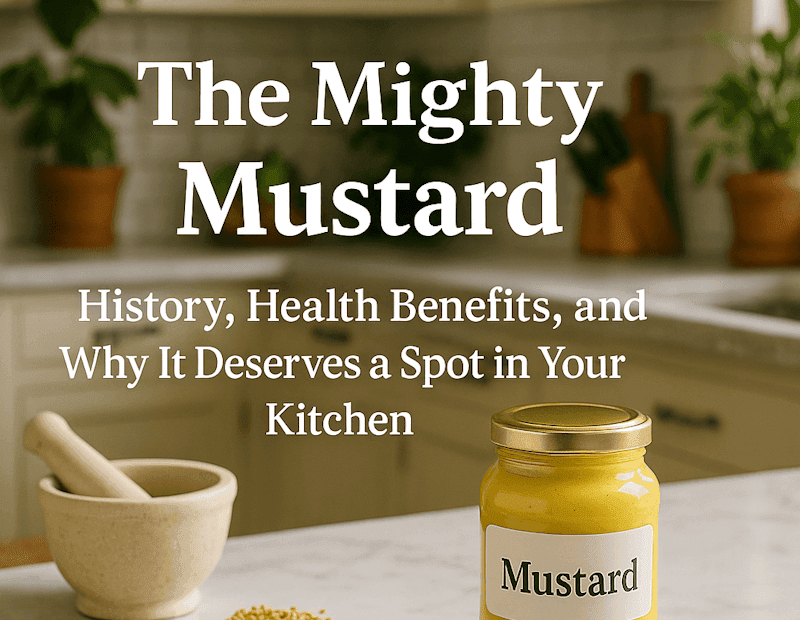
Let’s explore why mustard is a mighty little miracle in a jar.
Anyone who knows me knows I’m obsessed with mustard – it’s always in my kitchen, and I seriously can’t get enough of it.
Few condiments can claim a legacy as ancient, a nutritional profile as impressive, and a flavour as bold as mustard. Whether it’s drizzled generously over sausages, whisked into vinaigrettes, or dolloped beside a crispy schnitzel, mustard has quietly held its place at the table for centuries. And as a nutritionist – and a mustard enthusiast – I can confidently say: this is one of the healthiest, most underrated condiments on the shelf.
A Condiment with Royal Roots: The Fascinating History of Mustard
Mustard’s story begins thousands of years ago. Mustard seeds were found in Tutankhamun’s tomb, suggesting they were prized in ancient Egypt – not just as food, but possibly for their medicinal or symbolic properties. The Romans were likely the first to mix ground mustard seeds with unfermented grape juice (must), creating an early version of the mustard we know today.
By the Middle Ages, mustard had spread across Europe. In 13th-century France, the city of Dijon became the epicenter of mustard production, giving rise to Dijon mustard. Meanwhile, in Eastern Europe, mustard became a staple – always ready to accompany mici / mititei, pork, and hearty stews.
Why Mustard Is a Nutritionist’s Dream Condiment
Let’s face it: many condiments are hidden sugar bombs. Ketchup, barbecue sauce, and even some salad dressings can contain more sugar than a cookie. But mustard? It’s different. It’s naturally low in calories, carbs, and sugar. And the best part? You don’t have to sacrifice flavour.
Here’s why regular yellow mustard and Dijon mustard are the best choices in the store:
Low in calories – Unlike many condiments, mustard is naturally low in calories, most mustards contain 5–10 calories per teaspoon.
Zero added sugar – Especially in Dijon or classic yellow mustards. Always check the label, though.
Rich in antioxidants – Mustard seeds contain compounds like glucosinolates, isorhamnetin, carotenoids and kaempferol, which may help fight inflammation.
A source of selenium and magnesium – These trace minerals play a role in immune function and metabolism.
Supports Digestion – Mustard has traditionally been used to stimulate digestion and appetite.
May Help with Blood Sugar Regulation – Some studies suggest that mustard seeds may have a beneficial impact on blood sugar levels.
Avoid honey mustard or sweetened specialty blends if you’re focused on weight loss or blood sugar balance – they often contain added sugars or syrups that can sabotage your goals.
How to Use Mustard
One of mustard’s superpowers is its versatility. It adds depth, tang, and brightness to everything from meats to vegetables. Here are some delicious ways to use it:
With Sausages, BBQ meats etc. – There’s something magical about the way mustard’s sharpness complements the juicy, smoky flavour of sausages and BBQ meats.
In Salad Dressings – Mix mustard with olive oil, vinegar, lemon juice, garlic, and herbs for a quick and healthy vinaigrette.
As a Marinade Base – Dijon mustard makes an excellent base for chicken, fish, or tofu marinades. It helps tenderize while adding flavour.
On Sandwiches and Wraps – Ditch the mayo and go for mustard. It brings zip and cuts through rich meats or cheeses. Whether spread on bread or drizzled inside a wrap, mustard adds that perfect kick.
As a Dip – Mix with Greek yogurt or tahini for a creamy, sugar-free dipping sauce.
Homemade Sauces – Combine with balsamic vinegar, a touch of honey (if desired), and garlic for a quick glaze or drizzle.
And if you’re feeling adventurous, you can make mustard at home with just mustard seeds, vinegar, salt, and water. Customize the texture, spiciness, and acidity to your liking – perfect for those who like full control over their condiments. I love playing around in the kitchen and making my own mustard from scratch – it’s such a fun way to get creative with flavors.
A Personal Note as a Nutritionist
I recommend mustard to many of my clients – especially those on weight loss or clean eating journeys – because it’s one of the few condiments that doesn’t derail progress. It supports flavourful meals without the baggage of extra sugar or calories. Plus, it’s budget-friendly and accessible in most grocery stores around the world.
When you’re trying to eat healthier, having go-to flavour enhancers like mustard makes it easier to stick with nutritious meals. Healthy eating doesn’t have to be bland – and mustard is proof.
Whether it’s adding a punch of flavor to your weekday lunch or serving as a health-conscious alternative to sugary sauces, mustard truly earns its place in the spotlight. It’s ancient, affordable, good for you, and endlessly versatile.
So the next time you open your fridge, reach for that little jar of mustard. It’s not just a condiment – it’s a culinary powerhouse that’s been blessing our plates for thousands of years.
Looking
to improve your eating habits with a personalized plan?
As a
nutritionist, I help people make food choices that actually work for
their lifestyle. I offer a free 30-minute consultation to help
you figure out what’s right for you. Let’s chat and create a meal
plan you’ll love (and stick to).
Get in touch today – I’d love to hear from you!
Share: